
Remembrance · Resistance · Responsibility
BlackAugust
Remember the struggle. Recover the lessons. Build what freedom requires next.
We honor the past through Sankofa—not to live backward, but to retrieve the knowledge, courage, discipline, and responsibility needed to move our people and humanity forward.
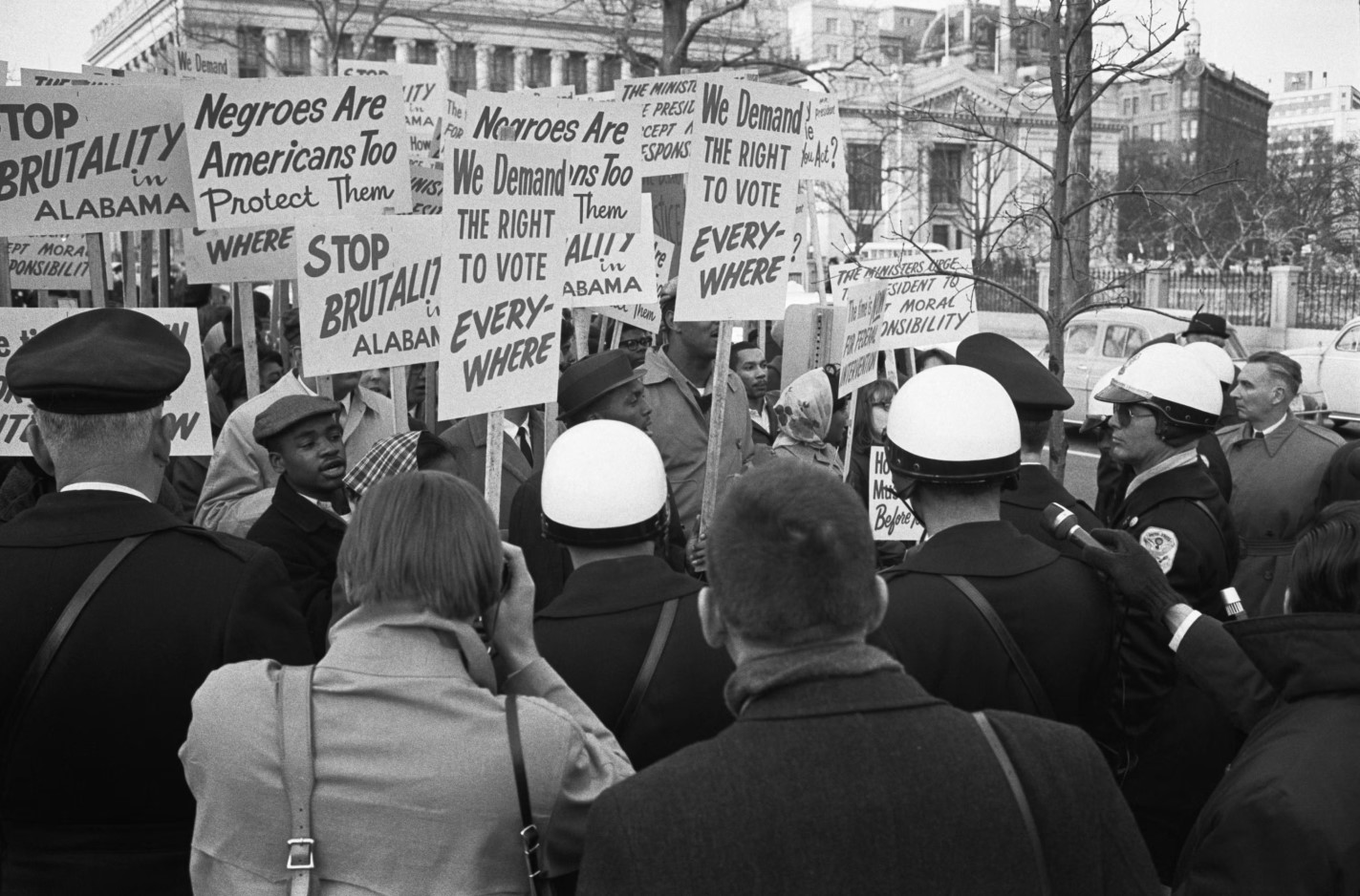
Enter the Black August calendar ↓Voting-rights demonstrators, Washington, D.C., 1965 · Library of Congress
Born through remembrance
Black August began behind prison walls.
Black August grew from the Black liberation movement inside California prisons and was formally organized at San Quentin in 1979. It honored Jonathan Jackson, George Jackson, William Christmas, James McClain, Khatari Gaulden, and others whose lives became inseparable from the struggle against racialized incarceration and state violence.
The observance expanded to include political education, study, fasting, discipline, remembrance of political prisoners, and reflection on the many decisive moments in Black freedom history that occurred during August.
It asks more of us than memory. It asks what we have learned—and what we are prepared to build with that knowledge.
Sankofa
We return for what the future needs.
Sankofa teaches us to reach back and recover what has been forgotten, stolen, abandoned, or left unfinished.
We do not study Black history as a museum of suffering. We study how our ancestors recognized danger, created solidarity, developed leadership, resisted impossible conditions, cared for one another, and imagined freedom before institutions were willing to grant it.
Every date below carries three questions: What happened? What did it teach us? What must we build now?
The month in memory
The Black August calendar
Open any date to explore the event, the lesson it carries, and the responsibility it places in our hands today.
August 1(1834)Emancipation Day
What happened
The Slavery Abolition Act came into force across most of the British Empire. August 1 remains an Emancipation Day throughout the Caribbean and in Canada.
Why it matters
Freedom came through generations of resistance by enslaved people, abolitionists, organizers, and communities that refused to accept bondage as permanent.
What we build
We treat freedom as unfinished work: something that must become real in health, safety, education, ownership, political power, and daily life.
August 5(1962)Nelson Mandela was arrested
What happened
South African authorities arrested Nelson Mandela. His imprisonment eventually lasted more than twenty-seven years.
Why it matters
A system can imprison a person without defeating the demand for freedom that person helped organize.
What we build
Leadership that survives repression because the people, principles, and institutions behind it are organized to continue.
August 5(2023)The Montgomery Riverfront Brawl
What happened
After white boaters attacked Black riverboat co-captain Dameion Pickett while he was doing his job, Black workers and bystanders rushed to his defense. Videos of the confrontation spread around the world.
Why it matters
The moment became a modern symbol of Black solidarity: people refused to stand by while a Black man was attacked, isolated, and outnumbered in Montgomery—a city central to both slavery and the freedom struggle.
What we build
Communities prepared to protect one another, document injustice, demand lawful accountability, and transform collective defense into organized power.

August 6(1965)The Voting Rights Act became law
What happened
President Lyndon B. Johnson signed the Voting Rights Act after years of organizing, litigation, sacrifice, and direct action against racial voter suppression.
Why it matters
The law demonstrated that organized public pressure could force the federal government to confront barriers deliberately constructed to deny Black political power.
What we build
District organization capable of protecting every vote, confronting new forms of suppression, and holding elected officials accountable after Election Day.
August 7(1970)Jonathan Jackson and the Marin County Courthouse rebellion
What happened
Jonathan Jackson entered the Marin County Civic Center in an effort to free incarcerated Black liberation activists. Jackson, James McClain, William Christmas, and Judge Harold Haley were killed.
Why it matters
The event became one of the central remembrances from which Black August developed inside California prisons.
What we build
A disciplined movement capable of defending human dignity while learning from the costs, limits, and consequences of every form of struggle.
August 9(2014)Michael Brown was killed in Ferguson
What happened
Police officer Darren Wilson killed eighteen-year-old Michael Brown in Ferguson, Missouri. The killing and official response prompted sustained protest locally and across the nation.
Why it matters
Ferguson exposed how policing, municipal power, fines, poverty, and political neglect can operate together against a community.
What we build
Public systems that protect life, answer openly for the use of force, and remain accountable to the communities they serve.
August 11–16(1965)The Watts Uprising
What happened
Six days of uprising followed a traffic stop in Watts amid longstanding anger over police violence, segregation, unemployment, housing, and unequal public investment.
Why it matters
An eruption has a history. Conditions ignored for years eventually become crises no institution can pretend not to see.
What we build
The organized capacity to address injustice before desperation becomes the only language power recognizes.
August 14(1791)Bois Caïman
What happened
A gathering at Bois Caïman, traditionally commemorated on August 14, helped prepare the uprising that became the Haitian Revolution.
Why it matters
Spiritual conviction, shared purpose, communication, and coordinated action helped enslaved people overturn an order built to make their freedom appear impossible.
What we build
Faith joined to disciplined organization—and spiritual clarity translated into practical liberation.
The precise date and details of the ceremony are interpreted differently across historical accounts; its place in Haitian memory and revolutionary history remains profound.
August 17(1887)Marcus Garvey was born
What happened
Marcus Mosiah Garvey was born in Jamaica and later built an international Pan-African movement centered on Black dignity, organization, enterprise, and self-determination.
Why it matters
Garvey demonstrated that Black people separated by borders could still recognize shared interests and organize at an international scale.
What we build
Networks that connect local strength to national and global cooperation without surrendering community identity.
August 19–26(2019)Seventh Annual Observance of B.A. Holy Week*
What happened
PHIERS established a distinct Holy Week observance within Black August to remember the people, relationships, and spiritual commitments that helped carry its vision into the world.
Why it matters
Liberation is inherited through history, but it is also carried through families, friendships, brotherhood, service, and promises kept across generations.
What we build
A living expression of remembrance that culminates in sharing a national and global vision intended to benefit Black communities and humanity.
*Established in 2019. The seventh annual observance culminates August 26, 2026. More to come.
August 21(1831 · 1971)Nat Turner rose. George Jackson was killed.
What happened
Nat Turner’s rebellion began in Southampton County, Virginia, on August 21, 1831. On the same date in 1971, writer and revolutionary George Jackson was killed at San Quentin State Prison.
Why it matters
The date connects resistance to enslavement with the modern struggle against racialized imprisonment and state violence.
What we build
The ability to study different generations of struggle honestly—honoring courage while developing strategies capable of protecting life and producing durable freedom.
August 22–23(1791)The Haitian Revolution began
What happened
Enslaved people in Saint-Domingue launched the uprising that became the Haitian Revolution and produced the first independent Black republic.
Why it matters
People treated as property defeated slavery, colonial rule, and armies sent by global powers to preserve both.
What we build
Institutions worthy of the freedom our ancestors fought to make possible—not merely resistance to what harms us.
August 25(1619)The Point Comfort landing is commemorated
What happened
In late August 1619, captive Africans were brought to Point Comfort in the English colony of Virginia. August 25 has become an official commemorative date for that landing.
Why it matters
The event became part of the development of racialized chattel slavery in English North America and the systems of extraction that followed.
What we build
Repair measured not only by what America admits, but by whether Black life, labor, knowledge, family, health, and potential are finally protected and valued.
Surviving records establish a late-August arrival but do not settle one universally accepted landing date.
August 24–26(1839)La Amistad entered United States custody
What happened
After the Mende captives aboard La Amistad liberated themselves at sea, the ship was seized off Long Island by the U.S. brig Washington in late August. Their fight then continued through American courts.
Why it matters
Their freedom did not begin when a court recognized it. It began when they acted together on the truth that their lives belonged to them.
What we build
Collective power capable of asserting freedom, surviving institutional resistance, and carrying the struggle into every arena where decisions are made.
National Archives records place the seizure on August 24; an influential 1839 lithograph and later commemorations use August 26.
August 28(1955 · 1963)Emmett Till was murdered. The March on Washington assembled.
What happened
Fourteen-year-old Emmett Till was kidnapped and murdered in Mississippi on August 28, 1955. Eight years later, approximately 250,000 people gathered for the March on Washington for Jobs and Freedom.
Why it matters
The date connects the exposure of racial terror with one of the largest organized demonstrations for civil rights, employment, dignity, and federal action in United States history.
What we build
The ability to transform grief and public truth into organized demands, durable law, economic opportunity, and institutions that protect Black children and families.
August 29(2005)Hurricane Katrina made Gulf Coast landfall
What happened
Hurricane Katrina made landfall on the Gulf Coast. Flooding devastated New Orleans after levee failures, displacing communities and exposing profound failures in infrastructure, emergency response, housing, healthcare, and public accountability.
Why it matters
A natural disaster became a human catastrophe because vulnerability and public protection had been distributed unequally long before the storm arrived.
What we build
Resilient public systems designed around the people most likely to be abandoned—not emergency promises made only after preventable harm has occurred.
August 30(1800 · 1948)Gabriel’s planned uprising. Fred Hampton was born.
What happened
August 30 was the date set for the uprising organized by Gabriel in Virginia in 1800. Fred Hampton, later a leader of the Illinois Black Panther Party, was born on August 30, 1948.
Why it matters
Both histories emphasize organization: the ability to connect people, material needs, political education, and a shared plan.
What we build
Programs that meet human needs while developing the solidarity and political power required to protect them.
The mission of The Prophecy
Liberation must become something our people can live in.
Black liberation is not complete when Black suffering is remembered. That suffering—and the systems that reproduce it—did not end when the dates in this calendar passed. The struggle continues because the consequences continue.
The current administration has moved beyond neglect and into active reversal. It rescinded the federal racial-equity directive, ordered agencies to terminate DEI and environmental-justice offices and programs, removed or archived hundreds of education resources connected to DEI, and directed national cultural institutions to eliminate material it characterizes as divisive or anti-American.
The administration calls this colorblindness and a restoration of merit. From the perspective of The Prophecy, it is part of a recognizable pattern: make inequality harder to name, make Black history easier to suppress, remove the tools created to measure and repair exclusion, and then describe the unequal result as neutral.
The Prophecy exists to recognize the pattern before the damage becomes irreversible—and turn recognition into organized responsibility.
Remembering is therefore only the beginning. We must carry resistance forward into voting power, healthcare, education, food, housing, work, ownership, public accountability, the safety net, and the supply systems that determine whether families can live with dignity.
PHIERS advances that work by helping Black people and allied communities organize congressional districts, document what our people require, compel public answers, and build practical solutions that improve life now while creating greater leverage for what comes next.
Our history proves that Black lives matter. Our future must demonstrate how much better the world becomes when Black potential is protected, organized, and placed in service to the greater good.
August 19–26 · Seventh Annual Observance
Black August Holy Week culminates in a celebration of how we are advancing the work—honoring the past by showing what PHIERS is building for our people and humanity moving forward.
More to come as the dates draw near.